How to Track Your Website's SEO Progress with the Right Metrics
- Post By: FAISAL MUSTAFA
- Published: September 16, 2026



As we all know, SEO is not a one-time task. Rather, it is an ongoing process of improving your website to enhance its visibility in search engine results. However, optimization alone is not enough.
To determine whether your efforts are actually proving valuable and producing meaningful results, you need to regularly monitor your website’s progress using the right metrics. Many webmasters rely only on engagement rates. While these offer useful insights, they do not provide a complete picture of SEO progress.
There are several other essential metrics that should be taken into consideration. This blog post is going to cover those in detail.
Tracking Your Website’s SEO Progress Through the Right Metrics
Below, we discuss some of the most important metrics that you should consider when tracking your website’s SEO growth.
-
Monitor Keyword Rankings
Analyzing keyword rankings is one of the most straightforward ways of determining your website’s SEO progress. These help you understand which positions your web pages hold in SERPs.
For example:
If a blog post is ranking on the third page of Google results for the primary keyword and then it gradually moves to the first page, this means your SEO efforts are driving positive results.
However, you should not consider only achieving the number one spot as a good performance indicator. This is because even moving from 50th position to 20th position demonstrates meaningful progress.
Now, the question is: how can you review keyword rankings? Well, there are many specialized tools available, such as Ahrefs. It offers in-depth insights into keyword positions, difficulty, and much more.
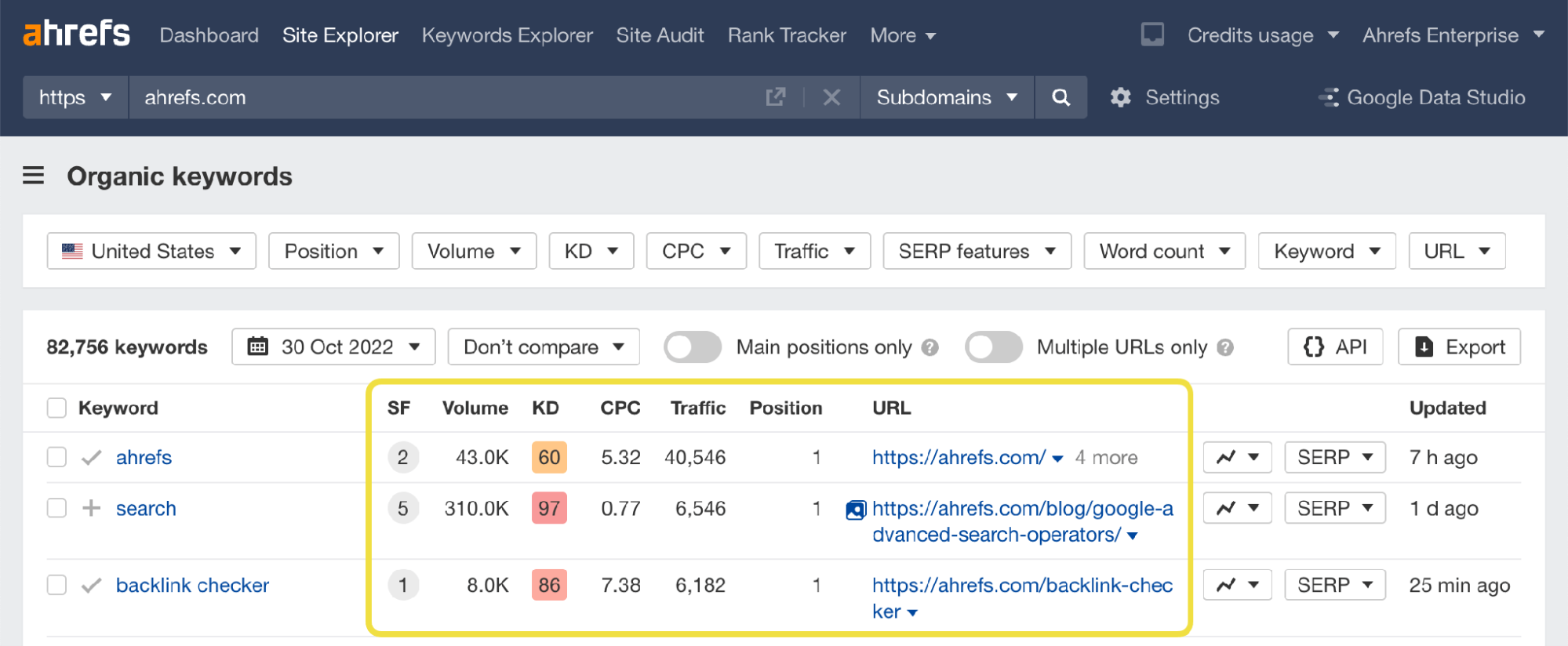
Regularly reviewing the keyword rankings will allow you to refine your SEO strategy before it's too late.
-
Check Organic Traffic
Organic traffic is another excellent metric that can help you monitor the website’s progress in terms of SEO. It refers to the number of visitors who arrive on your website naturally through unpaid search engine results.
After applying an SEO strategy, an increase in organic traffic can be a positive sign, especially when the traffic comes from the target search queries.
Now, here is a thing – an increase in traffic should not be your only concern. You should also consider whether the visitors are relevant to your website and taking meaningful actions.
For instance, your site experiences increased traffic, but visitors leave quickly after landing on a webpage; then this growth may not offer much value. On the other hand, a small increase in relevant visitors can prove more beneficial.
To get a clear picture, it is suggested to compare traffic trends for the past few months or even a year. You can use tools like SEMrush for this purpose. It offers traffic insights over days, months, and years, along with bounce rate and average session duration.
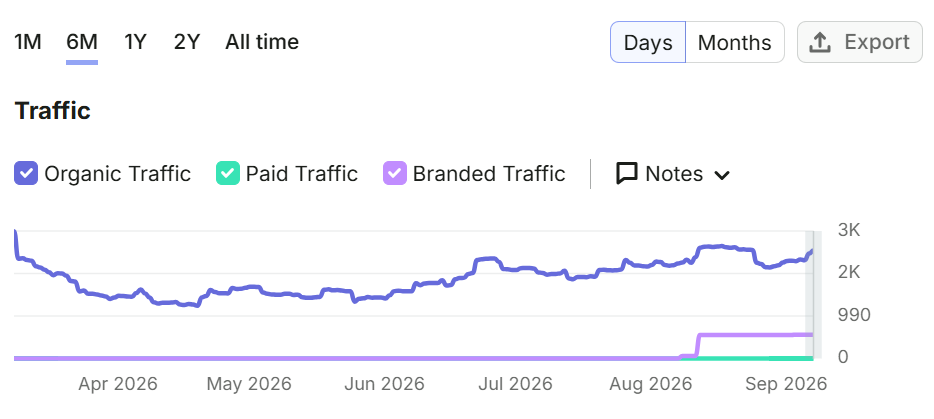
Keeping an eye on organic traffic helps you determine whether your website is gaining visibility and attracting more users after applying an SEO strategy.
-
Measure Domain Authority
Domain authority (DA) is a useful metric for monitoring a website’s overall strength and progress. It is a Moz score measured on a scale of 1 to 100 that estimates a website’s ranking potential in the SERPs. It is primarily based on link-related signals, including the quantity and quality of linking domains.
The tracking approach is simple. If the score is continuously increasing, this means your SEO efforts are paying off. On the other hand, if the domain authority score is decreasing, then you may need to re-evaluate the SEO strategy.
Wondering how to calculate this score? You can use specialized tools such as da-checker.org. It is free, simple to use, and assesses the DA score of any website with a single click.
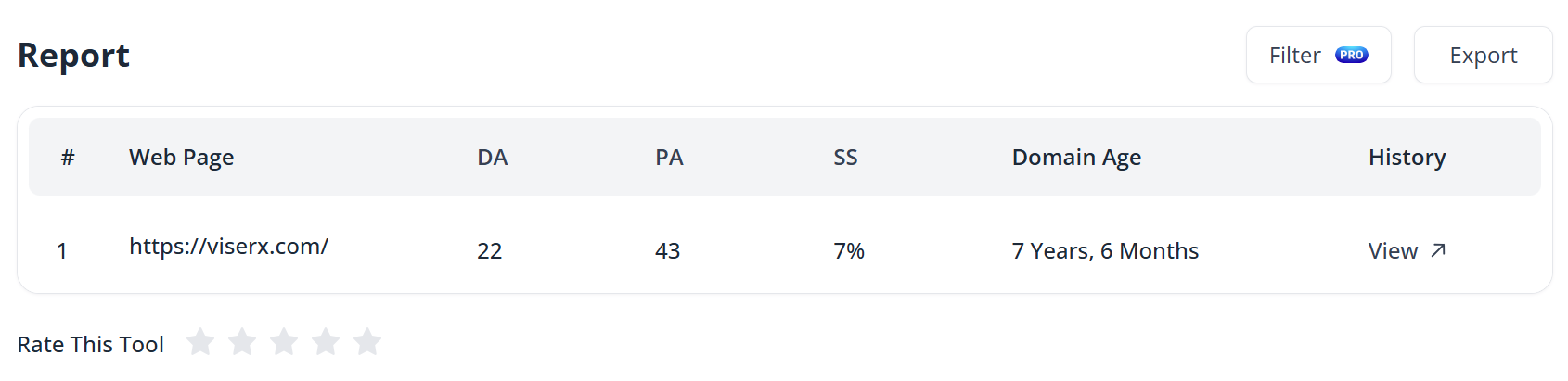
While domain authority is not officially recognized by Google, it is still widely used as a comparative SEO metric to evaluate a website’s progress.
-
Evaluate Backlink Metrics
Backlinks are among the signals Google considers in its ranking systems, and that’s the main reason why they remain the most important part of SEO. Getting links from credible, authoritative, and niche-relevant sources helps crawlers discover your content, resulting in better visibility and rankings.
That’s why evaluating a backlink profile is considered a key metric to determine a website’s SEO progress. It refers to the complete collection of all inbound links pointing from external sources to your site.
For evaluation, here is what you need to do:
- Start by counting the total number of backlinks and referring domains pointing to your pages. Don’t think that having the maximum number of links means better SEO performance. Google prioritizes quality over quantity.
- Identify which pages are earning more backlinks from relevant sources. Also, review the anchor texts; they should be relevant and diverse.
- Spot links that come from irrelevant, spammy, and low-quality sites.
- Examine how the stats of the backlink profile change over time.
You can use Majestic to quickly perform in-depth analysis of the backlink profile. It offers insights about referring domains, anchor text distribution, and much more.
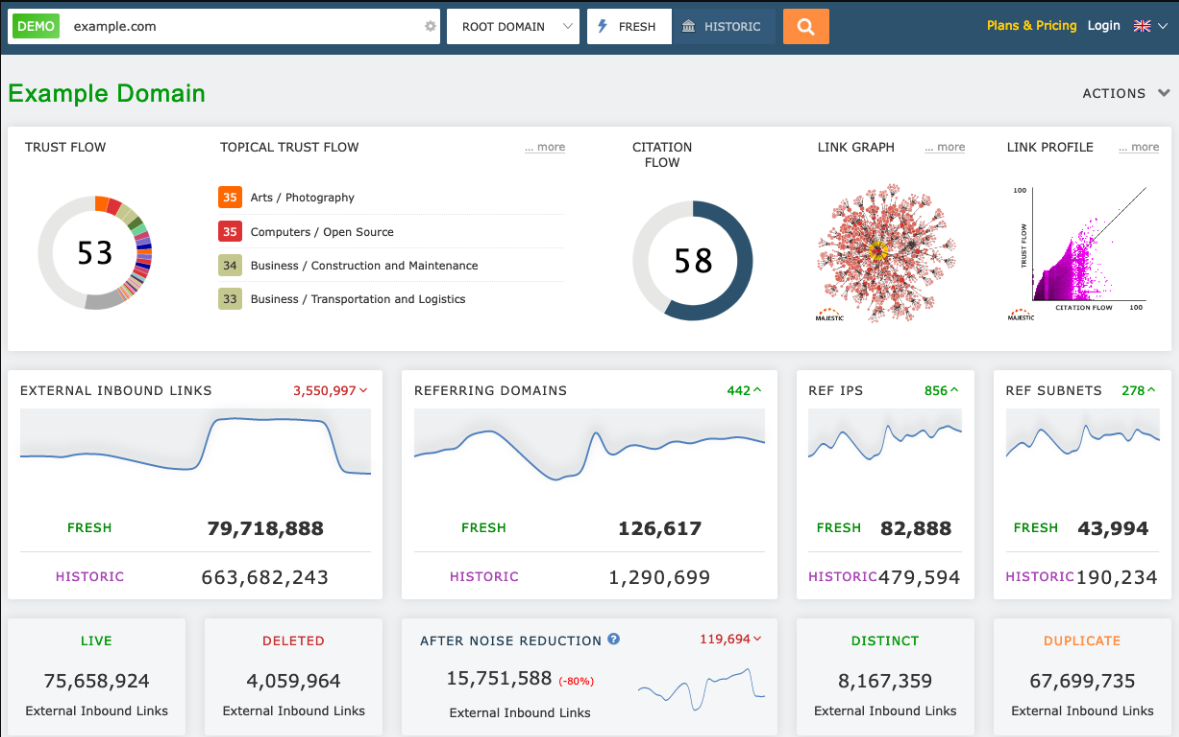
This monitoring can help you identify unnatural or potentially manipulative links and discover new linking opportunities.
-
Review Google Search Console Metrics
As mentioned earlier, the SEO progress of a site can’t be evaluated through a single metric. You should also consider the insights offered by Google Search Console. These usually include:
- Click-Through Rate (CTR)
- Impressions
- Clicks
- Average search position
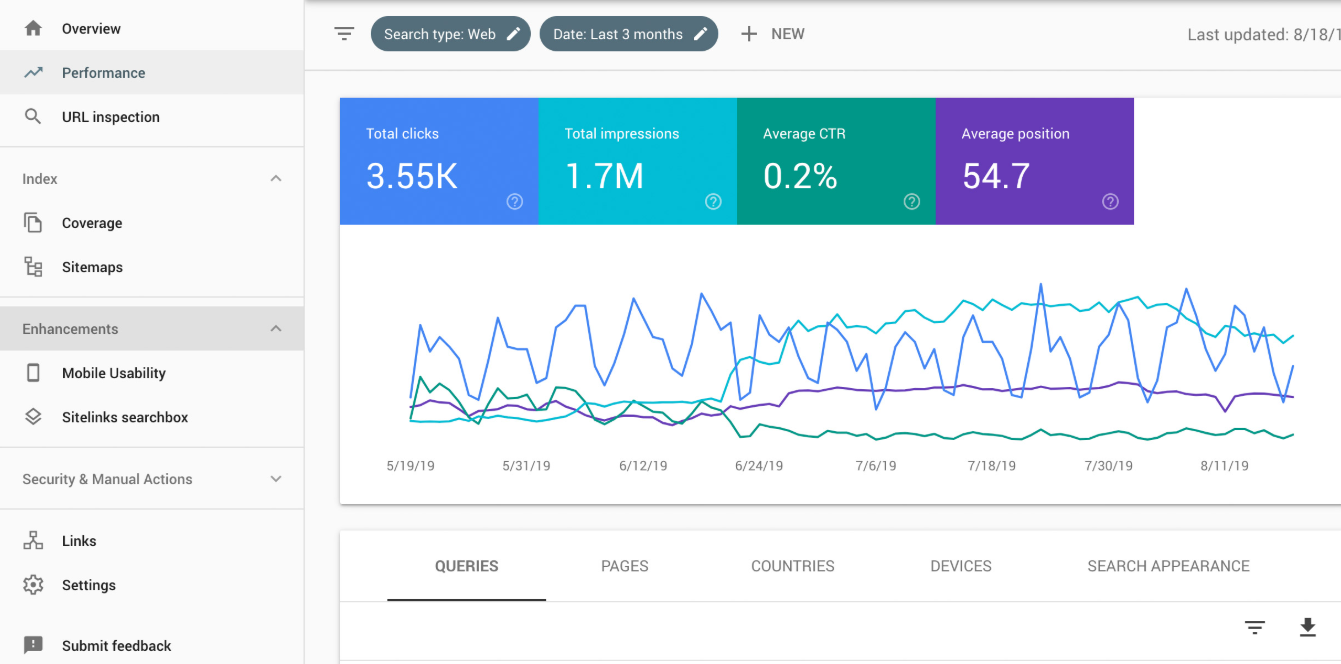
These insights will provide you with a good idea of whether your pages are appearing in search results and whether people are clicking on them. If the answer is yes, then it indicates progress. However, if the insights aren’t satisfactory, you need to refine the SEO strategy.
A wise approach is to regularly compare these insights with previous records (Google Search Console offers a special feature for this) to get a better idea.
Many people make a mistake here: they react to even short-term performance fluctuations; you should not do that. Focus on long-term performance trends and use the data to tailor the strategy accordingly.
Final Words
Continuously tracking your website’s SEO progress is crucial. It helps determine whether your efforts are actually driving results. There are multiple valuable metrics that should be considered for this, including keyword rankings, organic traffic, domain authority, backlink metrics, and Search Console data.
Note that no single metric can tell the complete SEO progress. So, you need to use all these in combination to get a better idea