Google Business Profile vs. Business Directories: Which Matters More for AI Visibility?
- Post By: FAISAL MUSTAFA
- Published: September 30, 2026
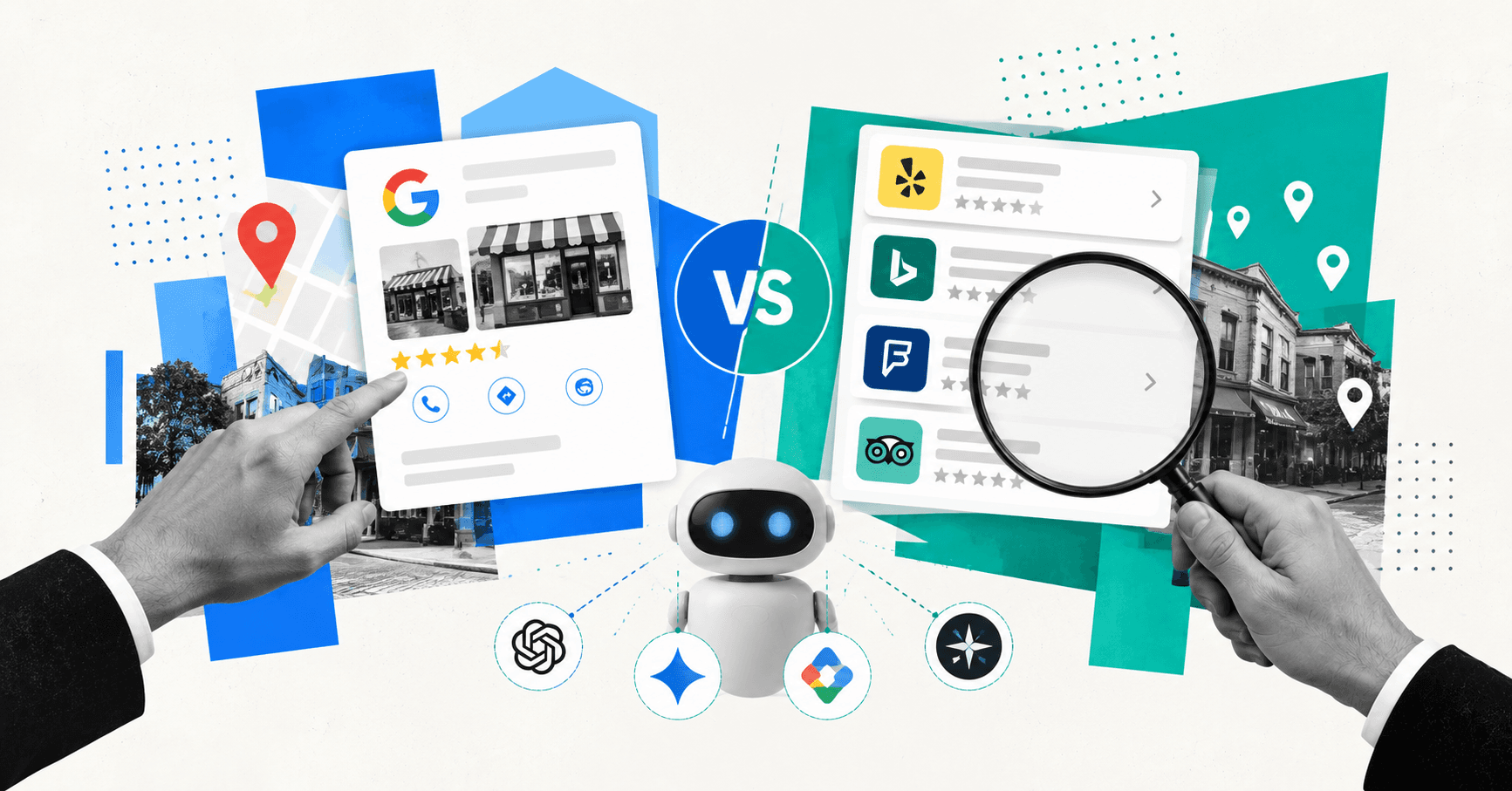


AI tools only recommend businesses they can verify. That is why Google Business Profile vs. business directories for AI visibility has a simple answer, and the answer is both.
Your profile feeds Google and Gemini, while directories give ChatGPT and Perplexity the outside proof. At VISER X, one of the reputable SEO agencies in Bangladesh, we see this mix-up often.
AI is changing how people search, and the businesses that win are the ones with matching facts everywhere.
Google Business Profile: The Foundation
- Gemini can use it. Gemini can pull GBP information into answers even when it does not show the profile as a source.
- You control it. Owners can update most details directly, including categories, hours, phone numbers and service areas.
- People check it last. Many customers hear your name from an AI tool, then search it on Google before they call.
Business Directories: The Validation
- ChatGPT and Perplexity look wider. In a Yext study of 6.8 million AI citations, listings made up 48.73% of OpenAI's citations. Perplexity favoured specialised directories.
- Matching details build trust. When your name, address and phone number are the same across platforms, AI tools can link them to one real business.
- Quality beats volume. A short list of active, relevant platforms works better than hundreds of duplicate or wrong listings.
Summary Strategy
- Do both. Your GBP is the anchor. Directories are the outside proof.
- Audit first. Make your website and GBP match before you add new directory listings.
Below, you will see which sources matter most, how to keep your details consistent, and where to spend your first hour.
What Does the Data Say About GBP vs. Directories?
No single source type wins.
The Yext research found that websites and manageable listings both play a major role in local AI visibility, and each AI tool leans on a different mix of them.
The queries covered finance, food service, healthcare, and retail.
|
|
|
|
|
|
|
|
|
|
|
|
|
|
|
|
|
|
|
|
|
|
|
|
The same study found that brands could manage or influence the sources behind roughly 86% of consumer-facing AI citations.
That includes your website, listings, review profiles, and social pages.
Studies contradict because each one measures something different. Treat every figure as a snapshot, not a ranking formula. Four things change the results:
- What is counted. One study counts how often a source shows up in AI answers. Another counts how many different websites show up at least once. The same data can tell two different stories.
- What people ask. "What is a plumber near me?" and "What is the best plumber in Dhaka?" pull from different sources.
- The industry. Healthcare, hotels, finance, and retail each trust different websites.
- The AI tool. Gemini, ChatGPT, and Perplexity all find their answers in different ways.
So do not chase one number. Build a strong presence across your website, your GBP, and the directories that fit your market.
What Does Google Business Profile Control?
Google Business Profile (GBP) is the profile you control most inside Google.
It shapes how you show up in Google Search, Maps, branded searches, calls, direction requests, Google reviews, and Gemini answers that use Google's own local data.
Gemini does not always show your GBP as a source.
It can use your Google Business Profile data without naming it as a source. That data lives inside Google's own system, so Gemini has no reason to cite it like an outside website.
A missing citation does not mean missing influence.
Fill in every field below, then keep each one current:
- Business name
- Address or service area
- Primary and secondary categories
- Phone number and website URL
- Opening hours, including holiday hours
- Services, products and attributes
- Recent photos
- Reviews and owner replies
Pro Tip: Pick your primary category based on what you actually sell, not on what might bring the most traffic.
It is the shortest signal of what your business is. Secondary categories fill in the rest.
GBP still matters when AI recommends you somewhere else, because people double-check.
Someone hears your name from an AI tool, then searches it on Google before calling. They want to know if you are open, if the address matches, if the reviews look real, and if the phone works.
A neglected profile can undo the trust you built elsewhere.
If you need hands-on help, see our Google Business Profile optimization service.
What Do Business Directories Do for AI Systems?
Directories prove you are real. They are not a shortcut to higher rankings.
When several trusted sites show the same name, address, phone number, category, and website, AI tools can link them all to one business.
This matters most for tools that pull from many sources instead of one search engine.
OpenAI leaned on listings for local questions. Perplexity used more industry directories for opinion-style questions. Here is what that looks like by sector:
- A restaurant needs accurate details on Google, TripAdvisor, delivery apps, and review sites.
- A healthcare provider needs its website, Google listing, practitioner profile and specialist directories to match.
- A hotel needs Google, travel platforms, booking sites and tourism listings to agree.
- A B2B company needs Google, LinkedIn, industry associations and local directories to line up.
Rank directories by what they do, not by brand name.
|
|
|
|
|
|
|
|
|
|
|
|
|
|
|
|
|
|
|
|
|
|
|
|
Skip the hundreds of low-quality sites. A short list of active, relevant platforms beats a pile of duplicate or wrong listings.
Does ChatGPT Use Bing Places?
No one has confirmed it. A 2025 test reported by Search Engine Land saw ChatGPT run Bing searches.
But it did not pull profile data from Bing Places, Bing Maps or Bing's Yelp and Facebook review tools. Other sources claim a link, yet those claims are not proof.
Claim Bing Places anyway. It helps your Bing visibility and keeps another data source accurate. Just never promise a client that it gets them into ChatGPT.
What customers say about you often becomes what AI says about you. We help businesses collect, answer, and manage those reviews through online reputation management.
Which Directories Matter Outside the US?
The right directory is the one your local customers actually use.
It should have active listings and show up in real searches for your category. Many local SEO guides assume everyone is in the US. That advice falls apart for international businesses.
|
|
|
|
|
|
|
|
|
|
|
|
|
|
|
|
|
|
|
|
|
|
|
|
Test any regional directory before you commit:
- Search your service and city on the platform.
- Check whether active competitors appear.
- Confirm the profile supports a website, phone number, address, and category.
- Look for recent reviews or profile updates.
- Walk away from sites that look abandoned, spammy, or off-audience.
What Changes When GBP Adoption Is Low?
Accurate listings give you an edge where many businesses never claim their GBP. Directories do not replace Google.
But a business with a correct website, a claimed GBP, and the right local profiles is easier to verify than a careless rival.
GBP vs. Business Directories, Side by Side
Google Business Profile gives you direct control and the strongest pull in Google Search, Maps and Gemini.
Business directories give you independent proof that ChatGPT and Perplexity can check. GBP is free and quick to update. Directories vary by platform, so their quality matters far more than their number.
|
|
|
|
|
|
|
|
|
|
|
|
|
|
|
|
|
|
|
|
|
|
|
|
|
|
|
|
|
|
|
|
|
|
|
|
|
|
|
|
How Should You Prioritise Both?
Start with your GBP, then make every other source match it. This order works at any size. Bigger brands just need more structure.
See our local SEO service for the full approach.
Single-Location Businesses
- Claim and fully complete your Google Business Profile.
- Make your website's name, address, phone number, and hours match it exactly.
- Find your existing directory listings and fix the errors.
- Remove or merge duplicates.
- Add profiles on the right map, review, and industry platforms.
- Set up a repeatable way to ask for reviews.
- Audit your main listings every quarter.
Multi-Location Businesses and Franchises
- Create a unique GBP for each real location.
- Keep one master source of business data.
- Build one useful, indexable page for each branch.
- Use the same naming rules everywhere.
- Keep phone numbers and service areas accurate.
- Track duplicate listings by location.
- Switch to a listing-management tool when manual updates stop scaling.
Local websites still matter. Yext found they sometimes made up nearly 20% of citations for unbranded objective queries in Gemini.
Your branch pages are first-party proof.
|
|
|
|
|
|
|
|
|
|
|
|
How Do You Keep Your Information Consistent?
Consistent means AI tools can tell it is one business. It does not mean every comma matches. Fix the mismatches that break that link, then check on a schedule.
These are the most common breaks:
- "Suite 4" on your website but no suite on GBP
- An old phone number on Facebook
- "Road" on one listing and "Rd." on another
- A former business name still showing on directories
- Different opening hours on Google and your site
- "Marketing agency" in one place and "advertising company" in another
- A map pin in the wrong area
Run a NAP (name, address, phone) audit by checking these sources in this order:
- Website footer and contact page
- Google Business Profile
- Apple Business Connect
- Bing Places
- Major review platforms
- Industry directories
- Facebook, LinkedIn and Instagram
- Local and regional directories
For each source, write down the name, address, phone, website, category, hours, duplicate URLs, claim status, and last update date. Single locations can do this by hand every quarter. Multi-location brands need a master sheet or a listing tool. It also fits neatly inside a broader SEO audit.
Try This: Ask 5 to 10 local questions across ChatGPT, Gemini and Perplexity, such as "best plumber in Dhaka." Note whether you appear and which sources each tool cites. Repeat after every round of fixes.
Can Schema Markup Reinforce Your Business Details?
Yes, but it only clarifies. Schema gives search engines and AI tools facts about your business in a format machines can read. It does not guarantee rankings, rich results or AI citations.
Use LocalBusiness, or a closer fit like Restaurant or ProfessionalService. These properties help most:
- @id
- name
- url
- telephone
- address
- geo
- openingHours
- hasMap
- sameAs
The sameAs property links your site to your GBP, LinkedIn, Facebook and real directory profiles.
json
- {
- "@context": "https://schema.org",
- "@type": "LocalBusiness",
- "@id": "https://example.com/#business",
- "name": "Example Business",
- "url": "https://example.com/",
- "telephone": "+880-XXX-XXXXXXX",
- "address": {
- "@type": "PostalAddress",
- "streetAddress": "Example Address",
- "addressLocality": "Dhaka",
- "addressCountry": "BD"
- },
- "openingHours": "Mo-Fr 09:00-18:00",
- "sameAs": [
- "https://www.google.com/maps/place/example",
- "https://www.facebook.com/example",
- "https://www.linkedin.com/company/example"
- ]
}
Heads Up: For the article page itself, use Article schema with a Person author, plus BreadcrumbList. Skip FAQPage markup unless the page shows a real FAQ and meets Google's current rules.
Our web development team builds schema into the site itself.
How Can VISER X Help with Local AI Visibility?
We tie your website, GBP, listings, reviews and schema into one consistent system.
AI visibility is not a separate channel from local SEO. It comes from accurate information, strong location pages, and clean technical work.
We help local and multi-location businesses:
- Audit Google Business Profiles and existing citations
- Correct inconsistent business information
- Improve service and location pages
- Build a directory plan for each market
- Manage reviews and online reputation
- Add local business schema
- Track visibility across Google, Maps, and AI search
We helped BRAC reach 81% organic traffic growth and 216 new keywords in the top 1 to 3 positions within six months. Read the BRAC SEO case study, or speak with a strategist.
Key Takeaways
- Google Business Profile is essential for Google Search, Maps, and the final customer check.
- Directories help AI tools confirm your company is one real, consistent business.
- Your website is still the strongest source for facts you want AI to use.
- ChatGPT, Gemini, and Perplexity use different sources, so a Google-only plan leaves gaps.
- A few accurate, active listings beat hundreds of low-quality ones.
Quick Answers About GBP and Business Directories
Do I need to choose between Google Business Profile and business directories?
No, you need both, because GBP covers Google and Gemini while directories give ChatGPT and Perplexity outside proof.
Does ChatGPT actually use my Google Business Profile?
Nobody has confirmed it, and ChatGPT leaned more on listings and websites in Yext's data.
How many business directories should my business be listed in?
There is no fixed number, so pick a short list of active, relevant platforms for your industry and market.
What happens if my business information is inconsistent across sources?
AI tools struggle to link your listings to one real business, which weakens trust and can undo work you did elsewhere.
Is Google Business Profile enough on its own for AI visibility?
No, because ChatGPT, Gemini, and Perplexity use different sources, so a Google-only plan leaves gaps